Skin Tags Removal
Skin tags (also called acrochordons) are small, benign (non-cancerous) growths that typically appear on areas where skin rubs against skin or clothing, such as the neck, armpits, groin, eyelids, and under the breasts. While they are harmless, many people seek removal for cosmetic reasons or if the tags become irritated.
Discover how Skin Tags Removal Treatment can help you achieve smooth, clear skin free from unwanted growths.
What is Skin Tags Removal?
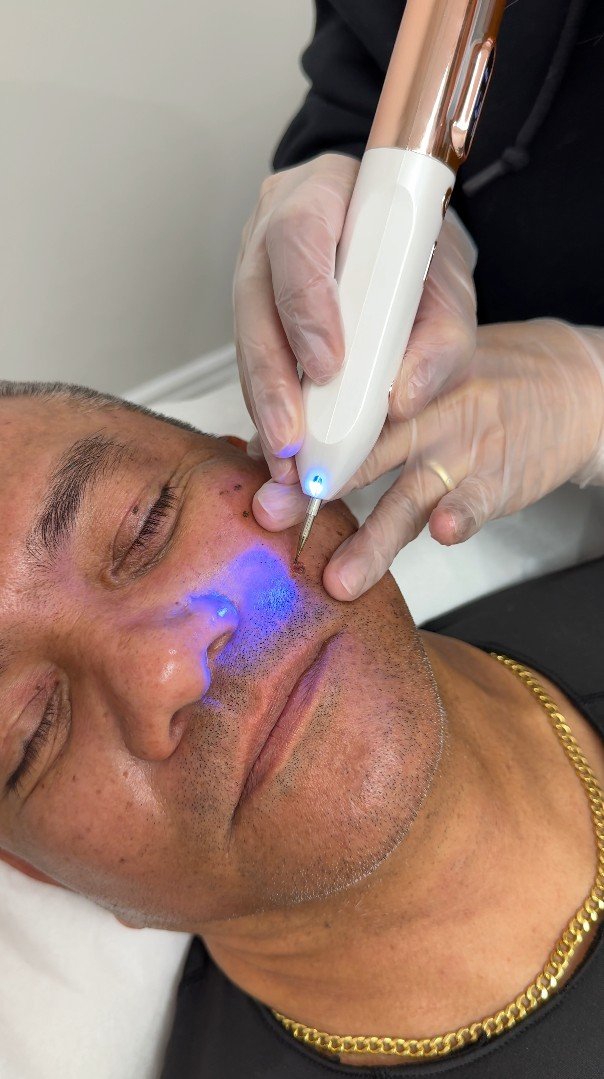
Skin tag removal treatment is a quick, minimally invasive procedure to safely eliminate these unwanted growths. The goal is to remove the tag entirely without causing significant pain, scarring, or damage to the surrounding skin.
Key Benefits:
Skin tag removal improves the appearance of your skin.
It helps relieve irritation caused by rubbing against clothes or skin.
The procedure is quick and minimally invasive.
It usually requires little to no downtime.
Removal prevents skin tags from growing larger or multiplying.
The treatment is safe and effective.
How the Treatment Works
Step 1: Consultation & Examination
A trained specialist examines the skin tag to confirm it is benign (non-cancerous) and safe to remove. The best removal method is chosen based on its size, location, and your skin type.
Step 2: Skin Preparation
The treatment area is cleaned to prevent infection. A local anesthetic may be applied to numb the area, especially for larger skin tags or sensitive locations.
Step 3: Removal Procedure
The skin tag is removed using one of the following methods:
Cryotherapy: Freezing the tag with liquid nitrogen so it falls off after a few days.
Excision: Cutting the tag off with sterilized scissors or a scalpel.
Electrosurgery: Burning the tag off using a small electric current.
Ligation: Tying the tag with a surgical thread to cut off blood supply until it falls off.
Step 4: Post-Treatment Care
A soothing ointment or bandage may be applied. You'll receive instructions on how to keep the area clean and protected. Avoid picking or irritating the area while it heals.
Step 5: Healing & Results
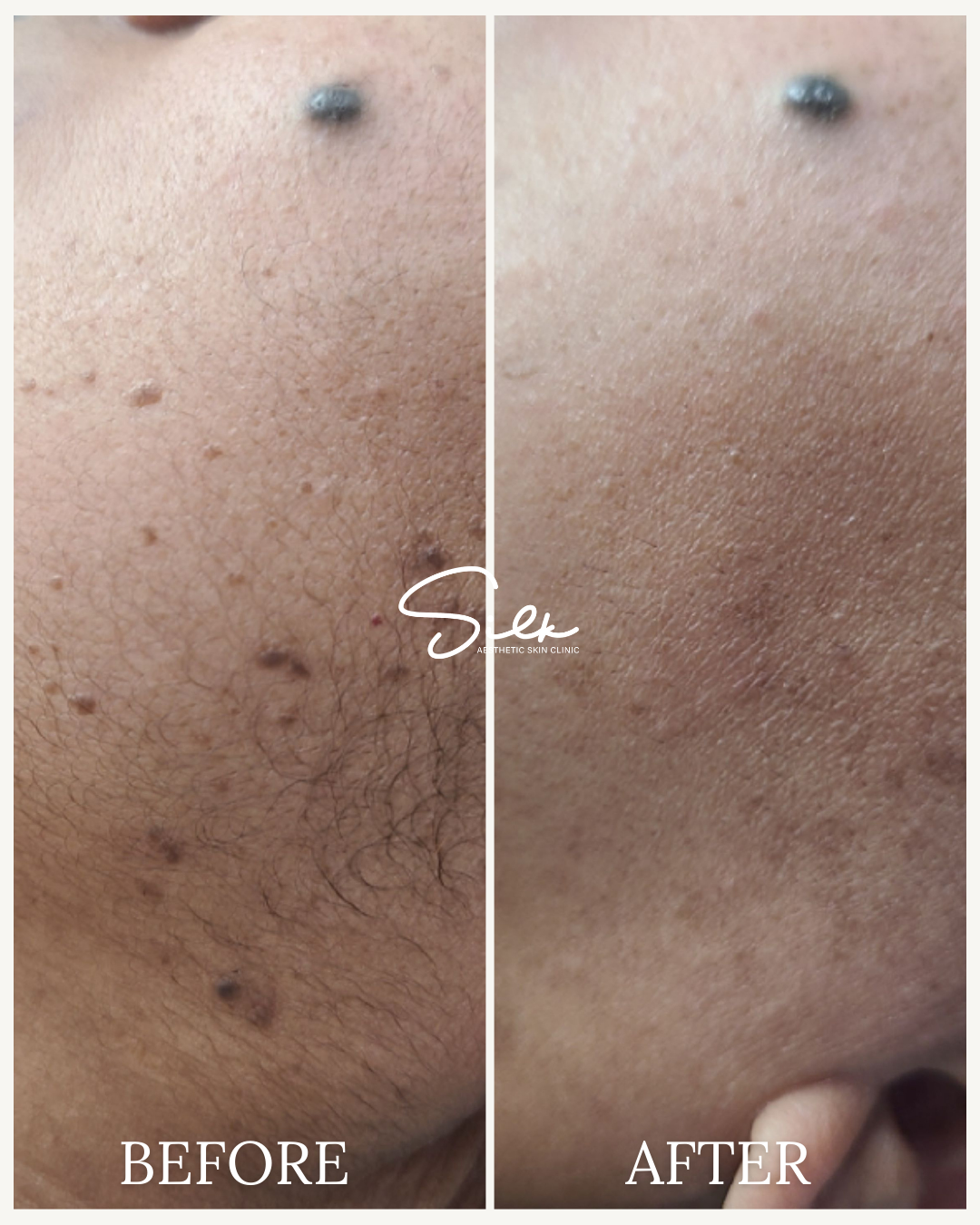
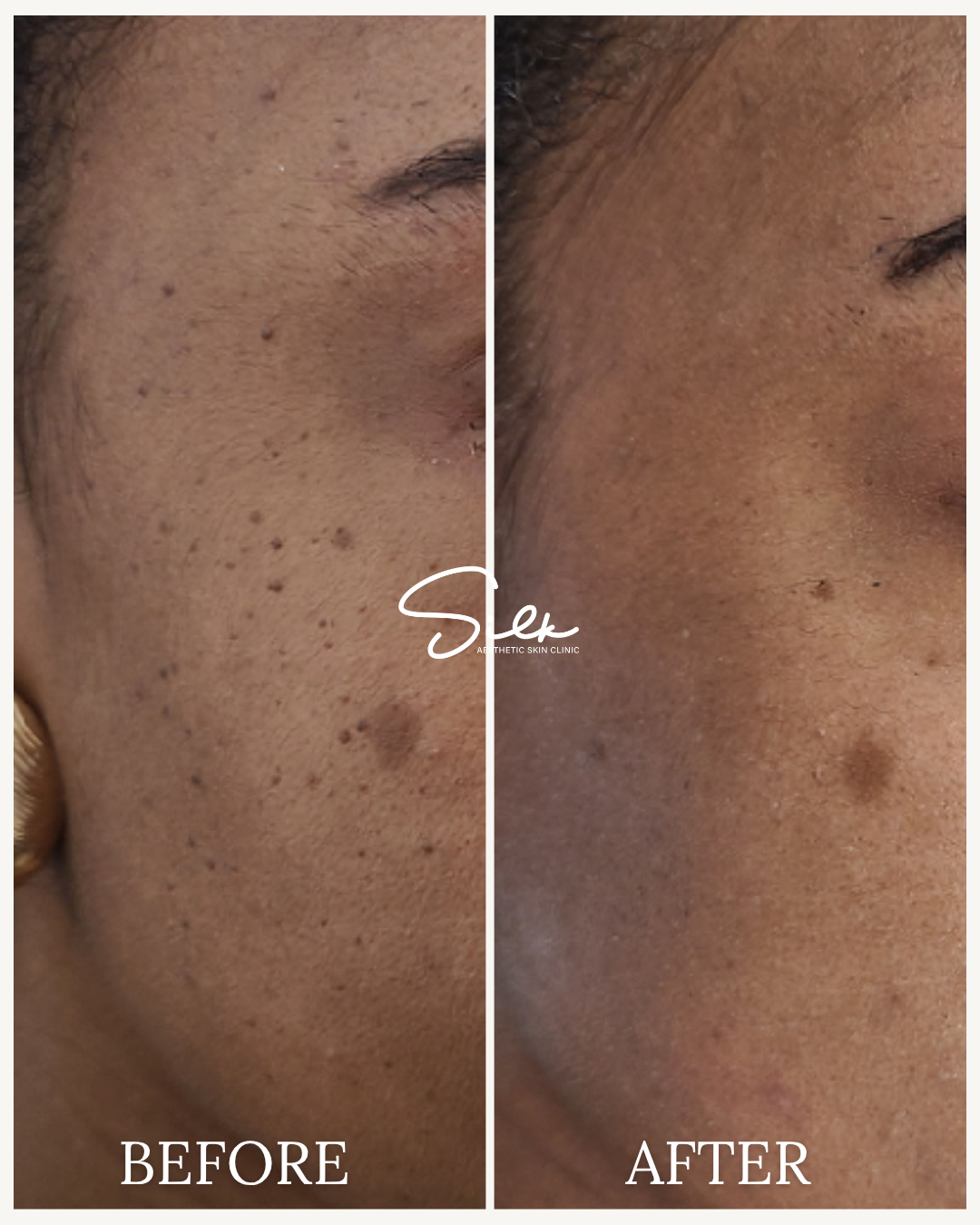
The area typically heals within a few days to a week. A small scab may form and fall off naturally. Minimal to no scarring occurs when proper aftercare is followed.
Before and After


Client Testimonials
-
![Five peach-colored stars aligned in a row on a black background.]()
Kimiesha C.
Great experience thus far! I heard about this clinic’s promotions on Hollywood peel and IV drips on Instagram then realized it was only 5 mins drive away; my visits have been tranquil with amazing customer service! I have a lot of skin tags and happy to be quoted a reasonable price for removal with the help of my health insurance!
-
![Six pink stars with black outlines arranged in a row on a white background.]()
Nik
I came across a Slik Aesthetic advert for the Hollywood Laser Treatment on IG and decided to call the clinic to make an appointment, as I have a skin condition (Melasma) which causes brown and grey spots all over my face especially my 2 cheeks. I spoke to Kevin (Customer Rep) who was very informative and thorough with questions regarding my concerns I had with my skin, and thereafter my first appointment was booked. Came in for my consultation and saw results of other clients at the clinic and decided to purchase a 10 session package, and I must say it was money well spent!
-
![Five peach-colored stars arranged in a row on a black background.]()
Susan K.
Absolutely love this clinic, do appreciate how management and staff are warm, kind, friendly and welcoming. That for me was a great impression knowing that I will get good service from the beginning of my treatment and certainly was at the right place. Great connection with everyone. The first appointment love how the manager sits and talk through the treatment required to get the best result, she also throws in a discount which I do appreciate lots. Also the place is super clean and hygiene is off the utmost level. I have seen great results from my treatments and plan on continuing my treatment with them. Would highly recommend this clinic to anyone who have imperfections and is needing some treatments.
-
![Five peach-colored five-pointed stars in a row on a black background.]()
Ryan P.
Not sure the name of the treatment I received but it was 3-step application on my face. The results were so good after one session my mother-in-law instantly booked an appointment. The team at Silk were upfront and very informative about everything.
-
![Five pink stars arranged in a horizontal line on a black background.]()
Joni B.
Fides and the staff at Silk Skin Clinic are great. Their Hollywood carbon laser treatment has helped a lot in brightening my skin. I’m also happy with their upper lip hair removal treatment.

Why Choose Silk Aesthetic Clinic’s Skin Tags Removal?

Professional Expertise
Our treatments are performed by licensed and experienced professionals who specialize in minor skin procedures. You can trust that your skin tag removal will be done safely, precisely, and with minimal discomfort.
Advanced, Gentle Techniques
We use modern, clinically proven methods like cryotherapy, electrosurgery, and gentle excision to ensure effective results with minimal scarring and downtime. Each treatment is tailored to your skin type and the specific characteristics of your skin tags.
Clean, Comfortable Environment
Your safety and comfort are our top priorities. Our medspa offers a welcoming, hygienic environment where you’ll feel at ease throughout your visit—from consultation to aftercare.
Personalized Care & Follow-Up
We don’t just remove the skin tags—we guide you through the entire process. You’ll receive clear instructions, skincare advice, and support to promote proper healing and reduce the chance of recurrence.
Frequently Asked Questions
-
Most removal methods cause minimal discomfort. A local anesthetic may be applied to numb the area, so you typically feel little to no pain during the procedure.
-
Common methods include cryotherapy (freezing), excision (cutting), electrosurgery (burning), and ligation (tying off the tag). Your provider will choose the best method based on the tag’s size and location.
-
Most skin tag removals take only a few minutes per tag. It’s a quick, in-office procedure with little to no downtime.
-
In most cases, scarring is minimal to none, especially with proper aftercare. Larger skin tags or those in sensitive areas may leave a slight mark.
-
Downtime is minimal. You may have some redness or a small scab for a few days, but you can usually return to normal activities right away.
-
Once a skin tag is removed, it typically does not grow back. However, new tags may develop over time, especially if you're prone to them.
-
Yes, skin tag removal is generally safe for all skin types. Your provider will ensure the method used is appropriate for your skin to minimize the risk of pigmentation changes.
-
No special preparation is usually needed. Just make sure the area is clean, and avoid applying lotions or creams before your appointment.
-
Usually not, unless the tag is causing irritation, bleeding, or medical concerns. Most removals done for cosmetic reasons are considered out-of-pocket expenses.